What Does Blood in Stool Mean?
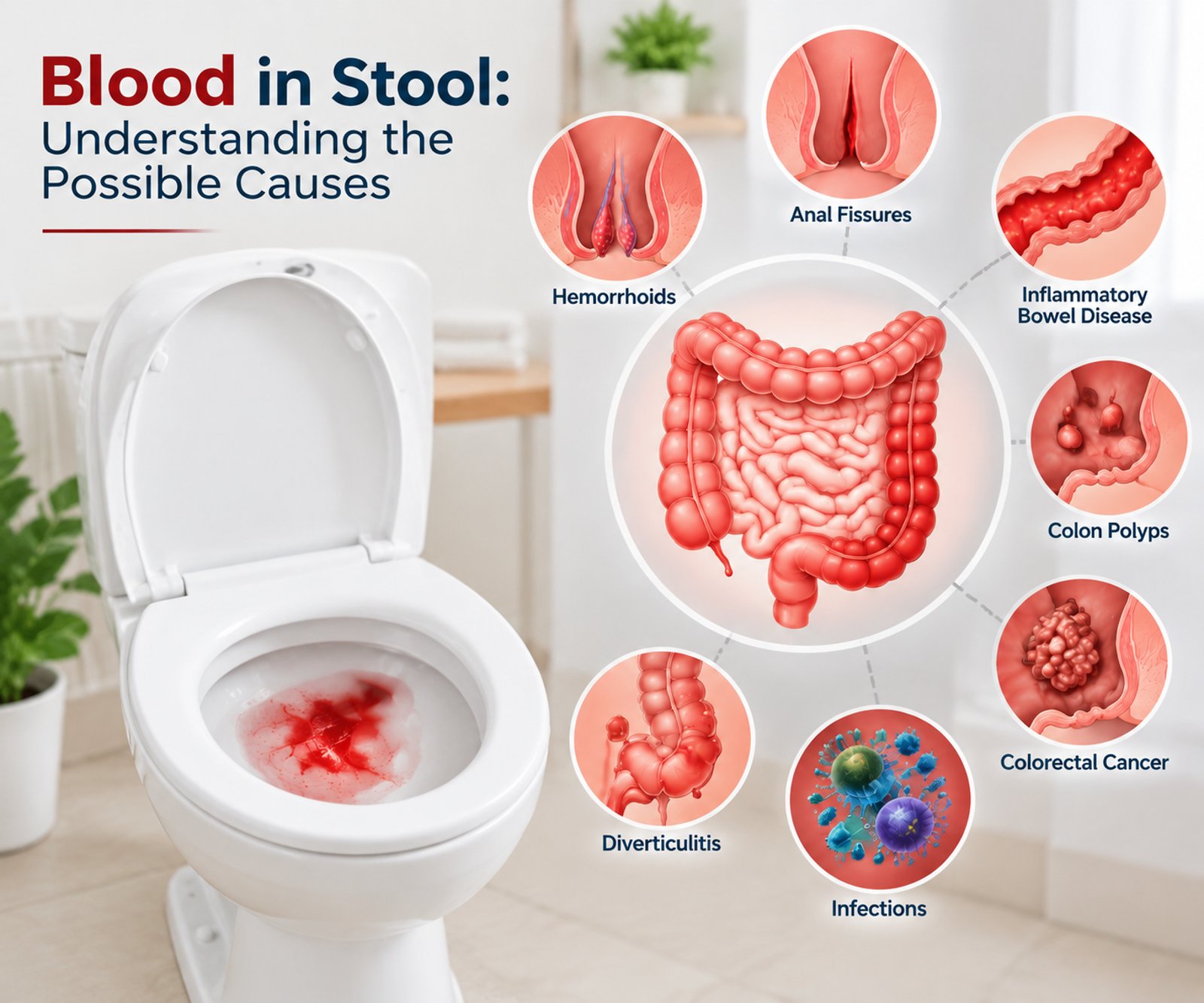
Blood in stool means you see red or dark spots in your poop. Sometimes, the blood is bright red. Other times, it looks dark or black. Either way, it can be scary. However, not all causes are serious. Still, it is important to know why blood appears in your stool. Early recognition helps you get the right care. The term “blood in stool” is also called rectal bleeding. It can come from anywhere in your digestive tract, which is the path food takes through your body.
Common Causes of Blood in Stool
Many things can cause blood in stool. Some are minor, while others need quick attention. Here are some common causes:
Because there are many causes, it is important to pay attention to other symptoms. For example, pain, fever, or weight loss can signal a more serious problem.
When to Seek Medical Attention
Sometimes, blood in stool is not dangerous. But, you should see a doctor if you notice:
Even if the bleeding seems minor, it is wise to get checked. Early care can prevent bigger problems later.
Diagnosis: How Doctors Identify the Cause
Doctors use several steps to find out why there is blood in your stool. First, they ask about your symptoms and medical history. Next, they may do a physical exam. Sometimes, tests are needed. These may include:
With these tools, doctors can find the cause and plan the right treatment. According to the CDC, early diagnosis improves outcomes for many conditions.
Treatment Options
Treatment depends on the cause of the bleeding. For example, if you have hemorrhoids, simple changes like more fiber and water can help. Sometimes, creams or minor procedures are needed. If an infection is the cause, doctors may prescribe medicine. For polyps or cancer, surgery or other treatments may be needed. In some cases, doctors treat ulcers with special medicines. Because each cause is different, your doctor will choose the best plan for you.
Prevention and Lifestyle Tips
While not all causes can be prevented, some steps lower your risk. For instance, you can:
By making these changes, you can help keep your digestive system healthy.
If you notice blood in your stool, consult at Dr.Jagadeesh for personalized advice.